



Project Management – Integrated Vision
Learn to plan, execute, and control projects with an integrated approach that supports better decisions and greater organizational value.
Live online training in project planning, scope, costs, scheduling, risk management, leadership, and widely accepted practices based on Project Management Institute (PMI) principles.
Project Management – Integrated Vision
Studies conducted by the Project Management Institute (PMI) have shown a clear correlation between an organization’s knowledge of project, program and portfolio management and its ability to successfully implement its strategy. Given this reality, incorporating a project management perspective within organizations becomes essential to provide structured solutions in project execution, effectively supporting the achievement of strategic plans and the realization of benefits. Project Management – Integrated Vision offers a comprehensive view of the knowledge, techniques and tools required for effective project management.
OBJECTIVES OF THE COURSE
General Objective
To present the key concepts, techniques and tools of project management, as well as the relationships between its processes, based on the principles of the Project Management Institute (PMI) and generally accepted best practices. It also contributes to promote the development of a common language that improves communication among those involved in the project.
Specific Objectives
- To present concepts, definitions, techniques and tools for effective project management.
- Understand the differences between project work and operational work, and between project management and operations management.
- Understand predictive and adaptive approaches as key elements for the development of project deliverables.
- Learn the basic concepts of project definition, planning and control.
- Understand the impact of human resources and communications on the success of the project and know its fundamental concepts and techniques.
TO WHOM IT IS ADDRESSED
This course is designed for people who wish to acquire or expand their knowledge in project management. It is especially oriented to Project Managers, Construction Inspectors, Portfolio Managers, Project Team Members, PMO professionals, Project Managers, Quality Managers, Decision Makers and Leaders of design, innovation or marketing projects. It is also valuable for consultants, managers, entrepreneurs and executives interested in leading projects.
Duration and Methodology
The program consists of twenty-four (24) hours of lectures and practical exercises.
Content of the Project Management course
1
Module 1
Introduction: Positioning of Project Management within the organization. The importance of execution. Understanding Portfolios, Programs and Projects.
Theoretical Foundations: Origins and evolution of project management. Definition and characteristics of a project. Evaluation of the success of the project: delivered value that justifies the effort and cost. Project objectives. The Project Environment: Enterprise Environmental Factors (EEFs) and Organizational Process Assets (OPAs).
Assignment: Define the project objective and develop the Project Scope Statement for a selected project.
Module 2
The Conceptual Model of Project Management: Expectations and competencies of the team. Power and influence of the Project Manager. Trends in project execution. The PMI® Conceptual Model. The Project Management Mindset. Project Principles: Application of the six principles, especially Integrating Sustainability in All Project Areas. Structure: Project Boundaries. Reinterpretation of the Process Groups as the five Focus Areas. Introduction to the seven Performance Domains of Project Management.
Introduction to Agile Thinking and Scrum: The Agile Manifesto. Definition of Agile. Iterative and incremental development approaches. Scrum framework.
Key Success Factors.
Module 3
Governance Performance Domain: Framework, roles and processes to optimize value delivery. Processes: Initiating the Project or Phase. Develop Project Charter. Integrate and Align Project Plans to create a unified Project Management Plan. Procurement and Change: Plan Procurement Strategy (make vs. buy decisions). Evaluate and Implement Change through integrated change control. Assignment: Define your project execution strategy.
Module 4
Scope Performance Domain: Ensure that the project includes all required work and no unnecessary work. Processes: Plan Scope Management. Gather and Analyze Requirements. Define the Scope. Artifacts: Project Scope Statement and User Story. Structure: Develop the Scope Structure. Understanding Project Life Cycles and Phases. The Work Breakdown Structure (WBS/WBS) and the Product Backlog.
Assignment: Develop WBS/WBS for your project
Module 5
Artificial Intelligence (AI) in Projects: Definitions and the role of AI in the context of projects. Generative AI (GenIA). Prompts Engineering: Structuring prompts for project tasks (Automation, Assistance, Augmentation). Ethics and Responsibility: Addressing bias, privacy and responsibility in the use of AI.
Assignment: Apply AI to review project artifacts developed to date.
Module 6
Financial Performance Domain: Processes related to the allocation of monetary resources and financial performance. Processes: Financial Management Plan. Cash Flows and Cost Estimating. Estimating: Types of estimates. The cost estimation process. Relative Estimating. Resource Estimating. Budgeting: Cost vs. Price. Revenue and cost forecasting. Reserve Management (Contingency Reserves vs. Management Reserves). The financial progress profile. Control: Monitoring and Controlling Finances. Introduction to Earned Value Management (EVM/EVM) concepts.
Assignment: Solve the case study “Pilot Rebuild Project”.
Module of 7
Schedule Performance Domain: Plan how and when the project will deliver its products. Definitions and Processes: Plan Schedule Management. Define Activities. Estimate Resources. Estimate Duration of Activities. Develop the Schedule. Network Logic, PERT and Critical Path Method (CPM). Visual Elements: Gantt Diagrams and the S-Curve. Monitor and Control the Schedule.
Assignment: Construct and solve the logic network and S-Curve for the project “Alembic Installation No. 1”.
Module of 8
Risk Performance Domain: Proactive management to build project resilience. Concepts: Definition of Risk (Threats and Opportunities) vs. Problems. Key Concepts: Uncertainty, Complexity and Ambiguity. Project Resilience. Risk Appetite and Risk Thresholds. Risk Management Process: Plan Risk Management and Identify Risks. Perform Risk Analysis (Qualitative and Quantitative). Plan Risk Responses. Risk Implementation, Monitoring and Control.
Assignment: Identify and perform a Qualitative Risk Analysis on 5 risks of your project.
Module of 8
The Human Factor in Projects: Resource Performance Domain: Planning and effective utilization of human, physical and virtual resources. Processes: Resource Management Planning. Estimate Resources. Acquire Resources. Leading the Team. Understanding the impact of multitasking and the Theory of Constraints. Stakeholder Performance Domain: Address stakeholder engagement and alignment. Processes: Identify Stakeholders. Plan, Manage and Monitor Stakeholder Engagement. Communication strategies to maintain alignment
Get program info
Program at a glance
Format
Online (Live classes)
Program duration
24 hours
Cost of the course
$490 $390
Schedule
Wednesdays: 18:00 – 20:30
Saturdays: 9:00 – 11:30
Start: September 30, 2026
Important Information
The programs offered by the Executive & Continuing Education Department at Millennia Atlantic University are non-credit programs and do not award academic credit. Upon successful completion of the program, you will receive a Certificate of Completion issued by Millennia Atlantic University.
Meet Your Tutors
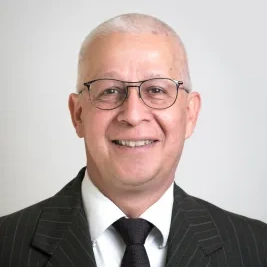
Howard A. Gilly C.
Bilingual (English and Spanish) Senior Program & Project Manager, +40 years of experience in EPC | EPCM contracts and multidisciplinary projects across Oil & Gas, Telecommunications, Infrastructure, and Energy. Specialist in Procurement & Supply Chain and Contract Administration. Claims management, cost, and schedule control. Commissioning, testing, start-up, and project handover.

Francisco Rafael Fermin Dellan
PMP®-certified Project Management professional with over 45 years of industry experience and more than 25 years as a university-level instructor. International facilitator specializing in PMP® preparation, Agile methodologies, and practical project management education across the United States and Latin America.
Frequently Asked Questions
Who is the Project Management course designed for?
It is designed for managers, coordinators, supervisors, consultants, entrepreneurs, and professionals involved in planning, executing, or monitoring projects. A formal project manager title is not required.
What will I learn during the program?
You will learn to define project objectives, scope, schedules, costs, risks, resources, and success criteria. You will also explore tools for improving communication, leadership, and decision-making throughout the project life cycle.
Is the course based on PMI principles?
Yes. The content incorporates concepts and widely accepted practices promoted by the Project Management Institute (PMI), along with practical tools. However, the course does not replace the official requirements for earning a PMI certification.
How is the course delivered?
The program is delivered through live online classes, allowing participants to interact with instructors, analyze cases, and ask questions in real time.
Will I receive a certificate?
Yes. Participants who successfully complete the program will receive a Certificate of Completion issued by Millennia Atlantic University. This is a non-credit professional training program.
You might also be interested in…
Project Management
(Live Online Classes)
Corporate Taxes
(Live Online Classes)
Online English Course
(Live Online Classes)
Personal Taxes
(Live Online Classes / On Campus)
Expert in Skilled Immigration to Spain
(Live Online Classes)
AI Creator
(Live Online Classes)
Digital Marketing
(Online Live Classes)
QuickBooks Advanced
(Online Live Classes)
Compliance and Arbitration
(Online Live Classes)
Businesses of the Future
(Online Live Classes)
Continuous learning is the foundation of lasting professional success.
Millennia Atlantic University
Explore MAU
About MAU
Undergraduate Programs
Graduate Programs
Executive Trainning
Student Services
Athletics
Alerts & News
MACAWS Blog
Contact Us
Admissions
Local Admissions
International Students
Online Admissions
Scholarships
Financial Aid
Career Paths
Business Administration
International Management
Human Resources
Entrepreneurship
Resources
Academic Calendar
Virtual Nest
Accreditation
Make a Payment
Catalogue
Student Consumer Information
Staff Email
Privacy Policy
Emergency Procedures Manual
Student Manual