
INTELLIGENT MANAGEMENT OF PROJECTS AND INITIATIVES WITH AI AND MACHINE LEARNING
Value Proposition
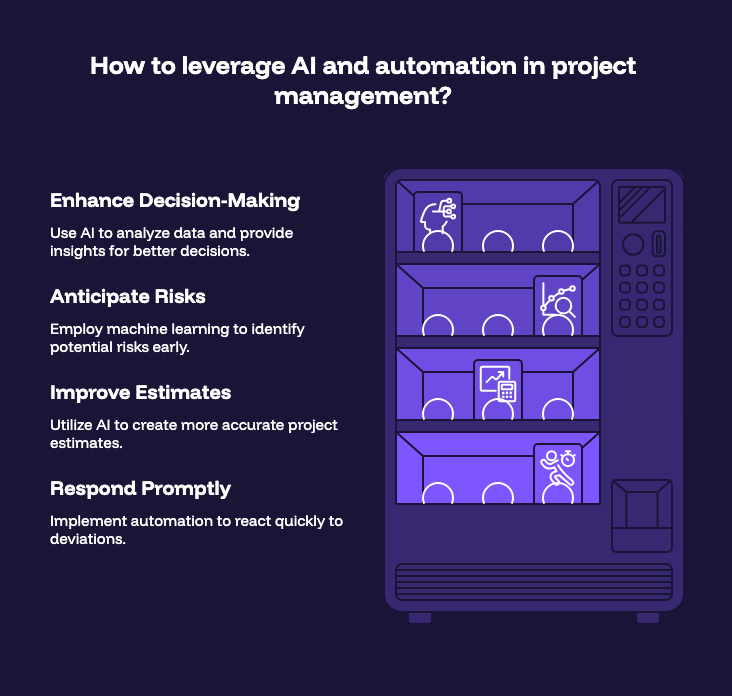
Artificial intelligence, machine learning, and automation are transforming the way projects and initiatives are managed. Their value lies not only in introducing new digital tools but also in turning operational data into useful signals for better decisions, identifying risks, and responding more promptly to deviations in scope, schedule, or cost.
In this context, intelligent project management enables a shift from reactive execution to a more preventive and informed management approach. By analyzing patterns in schedules, budgets, supplier performance, resource use, and historical outcomes, teams can identify risks earlier, prioritize interventions, and free up people’s time for activities that require judgment, leadership, and coordination.
Current Context
Project management today is no longer limited to methodologies, schedules, and periodic reports. It increasingly relies on tools capable of processing large volumes of information, analyzing data in real time, and generating recommendations that previously required weeks of manual consolidation. This changes how teams understand project performance and make decisions during execution.
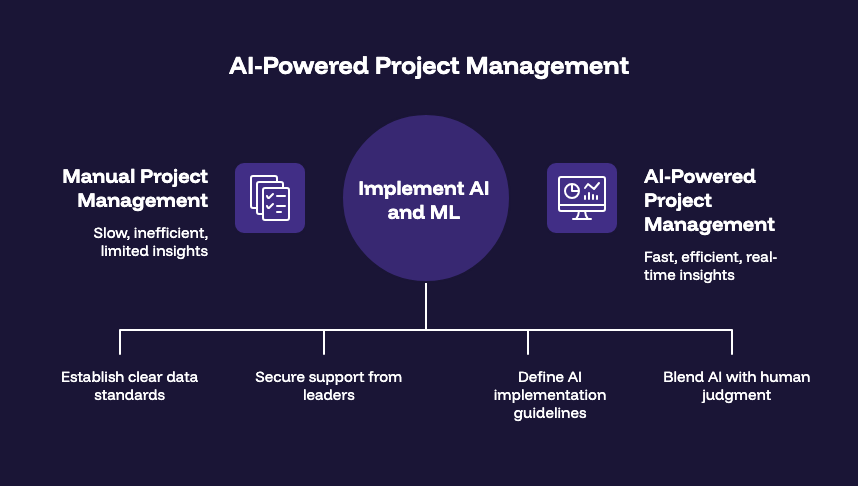
This evolution also affects entrepreneurial ventures, digital transformation initiatives, and organizations under pressure to execute faster with limited resources. In these settings, AI and machine learning can help identify patterns, compare scenarios, and reduce surprises. However, their adoption requires data governance, leadership, clear criteria, and a culture willing to integrate automated recommendations without replacing human judgment.
AI As Support For Management Rather Than A Substitute For Human Judgment
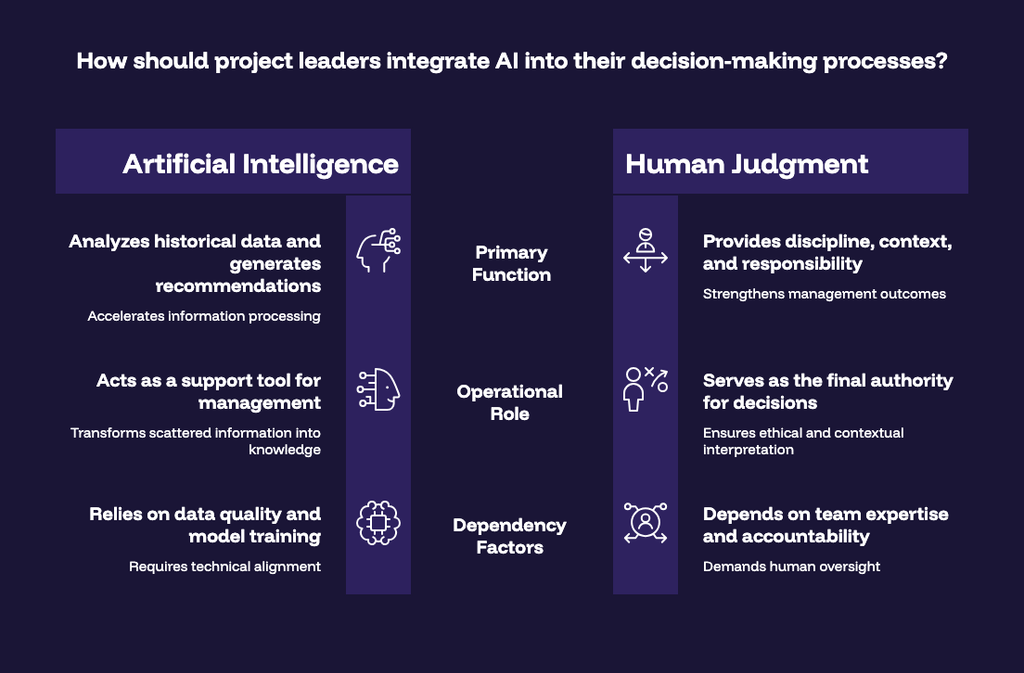
Artificial intelligence can be understood as a set of algorithms capable of learning from experience, processing information, and generating recommendations. In project management, this makes it possible to analyze historical data, detect recurring behaviors, and support decisions involving schedules, risks, costs, resources, and operational performance.
Its greatest value emerges when it helps transform scattered information into useful knowledge. A project constantly generates data on execution times, progress, changes, issues, costs, suppliers, and completion of deliverables. Without suitable tools, much of this information remains underused or is reviewed too late. AI can accelerate this analysis and turn it into early signals for action.
The Project Management Institute (PMI), a global authority on project management, published a specific standard for artificial intelligence in portfolios, programs, and projects in 2026. This standard highlights the need for a common language to align legal, audit, finance, technology, and business functions around how AI-related work in projects is approved, governed, and delivered.
Even so, AI should not be viewed as an absolute source of truth. Its results depend on data quality, how models are trained, and the team’s ability to interpret recommendations. Intelligent management does not eliminate human judgment. It strengthens it when used with discipline, context, and responsibility.
Machine Learning To Identify Patterns And Anticipate Deviations
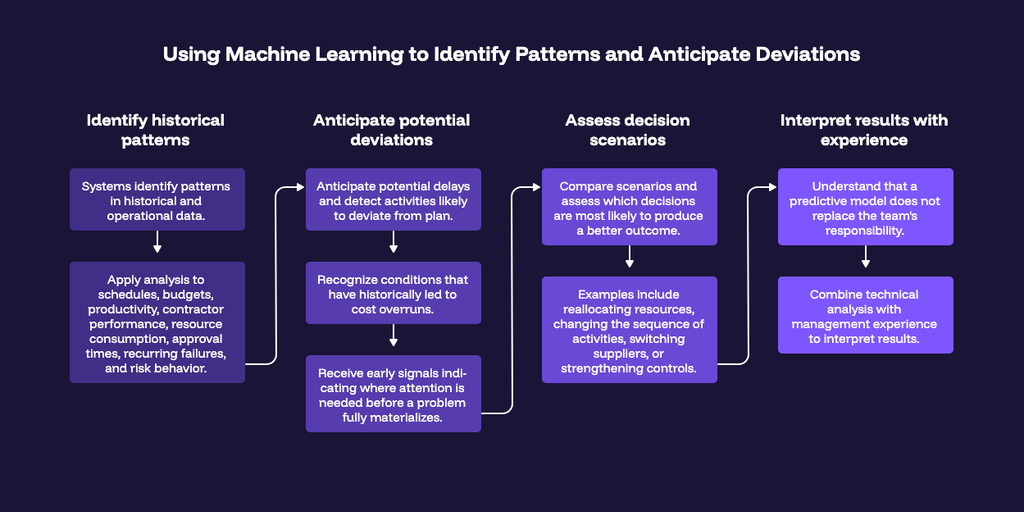
Machine learning enables systems to identify patterns in historical and operational data. In projects, this can be applied to the analysis of schedules, budgets, productivity, contractor performance, resource consumption, approval times, recurring failures, and risk behavior.
Based on these patterns, the team can anticipate potential delays, detect activities more likely to deviate from plan, and recognize conditions that have historically led to cost overruns. This enables action before a problem fully materializes. Instead of waiting for a variance report, the project team can receive early signals indicating where attention is needed.
Predictive analytics adds value because it does more than show what might go wrong. It also makes it possible to compare scenarios and assess which decisions are most likely to produce a better outcome. Examples include reallocating resources, changing the sequence of activities, switching suppliers, or strengthening controls at a critical stage.
The challenge is to understand that a predictive model does not replace the team’s responsibility. It offers signals, probabilities, and scenarios, but cannot independently interpret all the political, contractual, human, or organizational conditions affecting a project. This is why interpreting results must combine technical analysis with management experience.
Automation To Free Up Time And Reduce Operational Errors
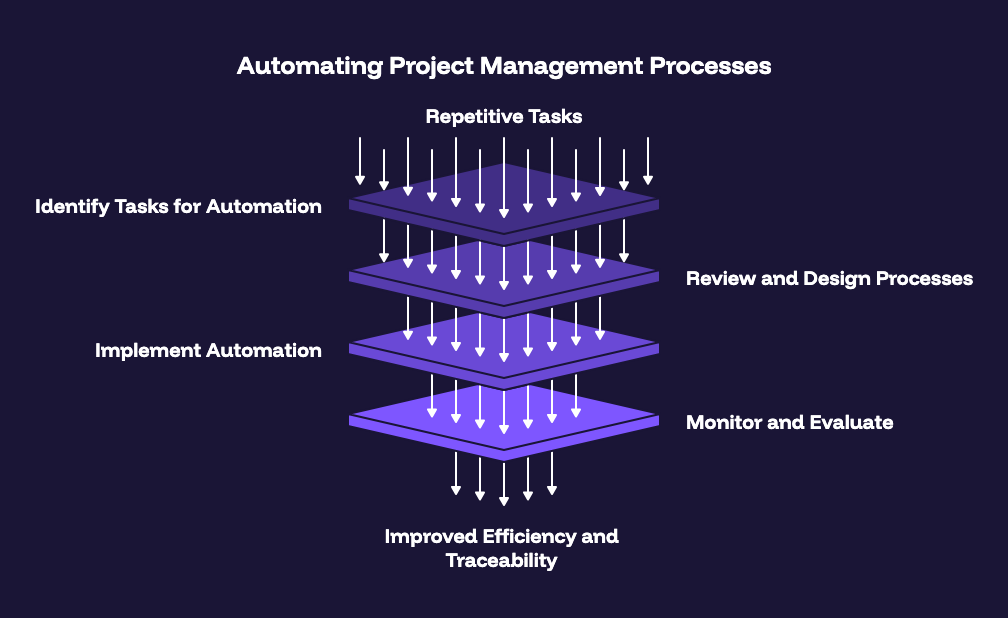
Automation involves performing repetitive tasks without constant human intervention. In project management, it can be applied to reporting, reconciliations, dashboard updates, deadline alerts, basic assignments, information gathering, approval tracking, and the generation of control records.
Its contribution is particularly valuable because it frees up the team’s time for activities requiring analysis, coordination, and human judgment. Project professionals often devote too much effort to consolidating information, preparing reports, or updating documents. Automating these processes reduces the operational workload and allows attention to focus on decisions that truly affect execution.
Automation also improves traceability. Every action, adjustment, or update can be recorded within a defined workflow. This facilitates audits, subsequent reviews, and lessons learned. With traceability in place, the project team can better explain which decisions were made, when they were made, and what information was available at the time.
However, automating without sound judgment can create new problems. If the underlying process is poorly designed, automation will only accelerate errors. Before automating, it is therefore necessary to review rules, responsibilities, information sources, and controls. Efficiency comes not from automating everything, but from automating the right things.
Predictive Analytics For Better-Informed Decisions
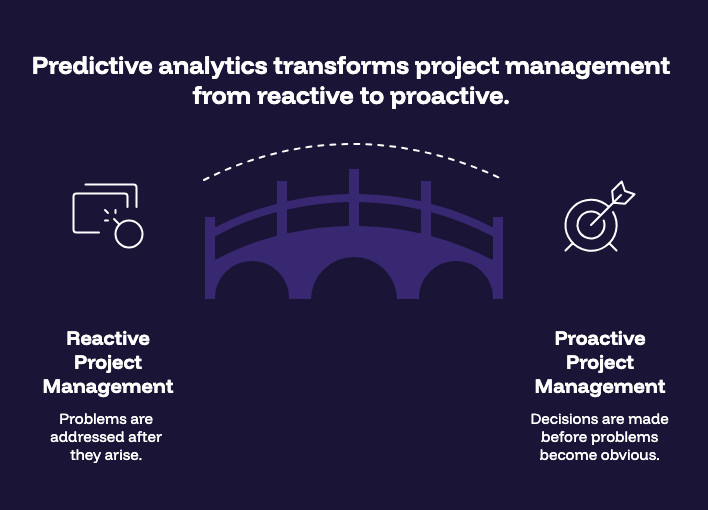
Predictive analytics makes it possible to project likely scenarios based on historical information and current data. In projects, this can help estimate delays, identify emerging risks, assess the impact of changes, and anticipate potential deviations in cost or performance.
Its value lies in enabling decisions before problems become obvious to everyone. A schedule may show that an activity is not yet officially behind schedule, while data analysis may reveal warning signs: low productivity, repeated approval delays, accelerated budget consumption, or dependence on a supplier with inconsistent performance.
McKinsey & Company, a global strategy consulting firm, has noted in its global AI survey that organizations report benefits in costs, revenue, and innovation, although many still struggle to move from pilots to impact at scale. This finding is relevant to projects because it shows that adopting AI does not guarantee value in itself; the impact depends on integrating use cases into actual workflows.
In project management, predictive analytics should support management discussions. It should not remain confined to dashboards or isolated indicators. It must translate into concrete decisions: what to adjust, what to prioritize, which risk to escalate, which resources to reallocate, and which preventive action to implement.
Reliable Data As The Foundation Of Intelligent Management
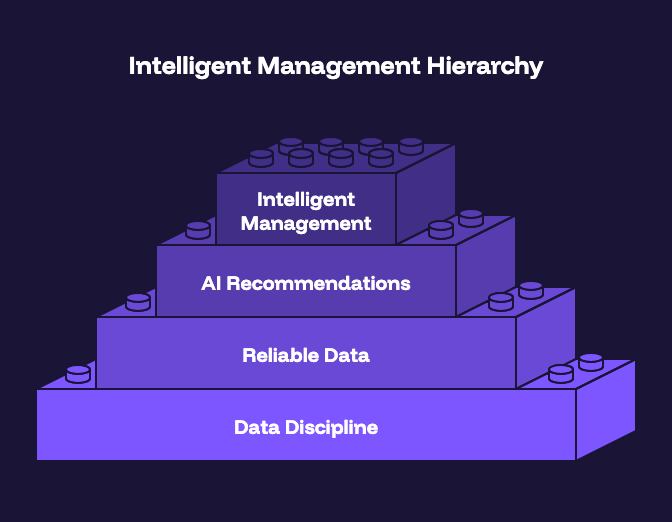
Data quality is one of the most critical factors in applying AI and machine learning to projects. If data is incomplete, inconsistent, outdated, or poorly classified, the resulting recommendations may be weak or even misleading. A sophisticated model cannot compensate for a poor information base.
This makes stronger data governance essential. The organization must define what information is captured, who updates it, how often, according to which criteria, and how it is validated. It must also establish rules to prevent duplication, misinterpretation, and decisions based on unreliable data.
ISO/IEC 42001, the international standard for artificial intelligence management systems, establishes requirements for implementing, maintaining, and improving an AI management system within organizations. Its relevance to projects lies in connecting the use of AI with controls, responsibilities, and continuous improvement, not just technology adoption.
When data is reliable, AI can provide more useful recommendations. When data is weak, the team must first invest in organizing the information before expecting real value from intelligent analysis. Intelligent management begins with basic data discipline.
Governance And Control For Responsible AI Use
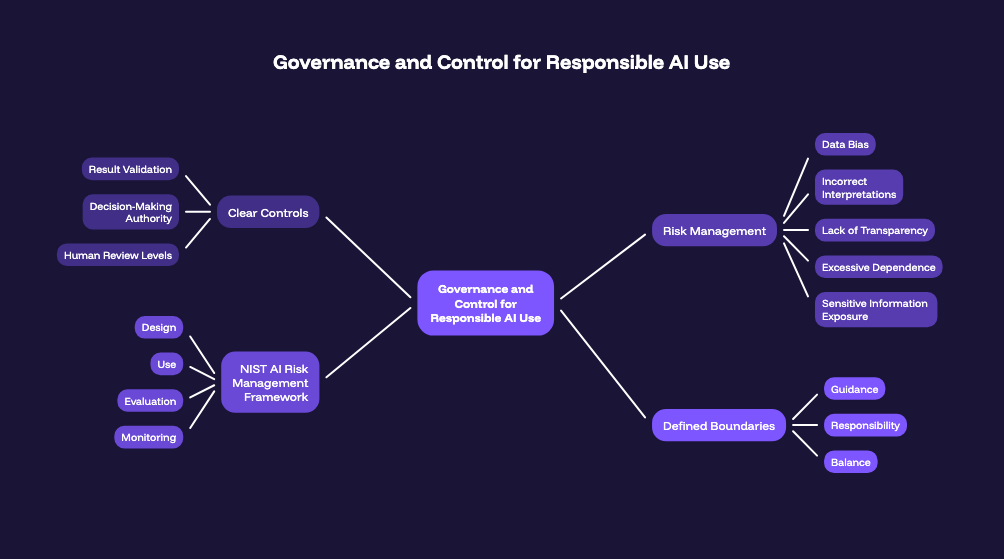
Using AI in projects requires clear controls. Simply introducing tools that generate recommendations, alerts, or automated analyses is not enough. It is necessary to define how results are validated, who can make decisions based on them, and what level of human review is required before taking action.
Governance also makes it possible to manage risks associated with AI use. These may include data bias, incorrect interpretations, lack of transparency, excessive dependence on automated recommendations, or exposure of sensitive information. In projects with financial, contractual, or regulatory implications, these risks must be managed with particular care.
The National Institute of Standards and Technology (NIST), a U.S. agency specializing in standards and technology, published the AI Risk Management Framework to support the management of risks associated with AI systems. This framework seeks to strengthen trust in AI through responsible practices for design, use, evaluation, and monitoring.
Applied to projects, this means that AI must operate within defined boundaries. Recommendations can provide guidance, but people must remain responsible for decisions. Intelligent management requires a balance between analytical speed and professional oversight.
Culture And Leadership For Integrating AI Into Execution
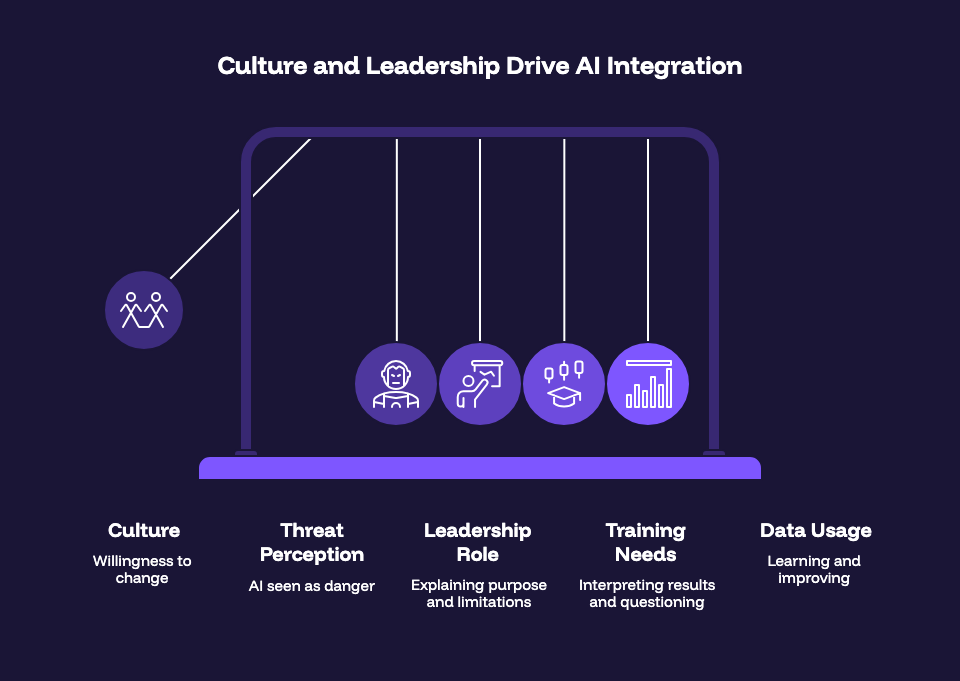
The adoption of AI and automation depends on more than tools. It also depends on team culture and the willingness to change ways of working. If professionals perceive AI as a threat, an imposed technology, or a source of excessive control, integrating it effectively will be difficult.
Leadership plays a central role. It must explain the purpose of these tools, clarify their limitations, and show how they help the team work better. AI should be presented as support for reducing the operational workload, improving visibility, and strengthening decisions, rather than as a replacement for professional judgment.
Specific training is also required. Teams must learn to interpret results, question recommendations, review assumptions, and understand when an alert requires immediate action or further analysis. Without these capabilities, an organization can fall into one of two extremes: ignoring useful signals or automatically accepting results without sufficient validation.
Intelligent management requires a culture in which data is used to learn and improve, not to punish. When the team understands that information helps anticipate problems and make better decisions, technology adoption gains legitimacy and practical value.
AI And Machine Learning In Entrepreneurial Ventures And New Initiatives
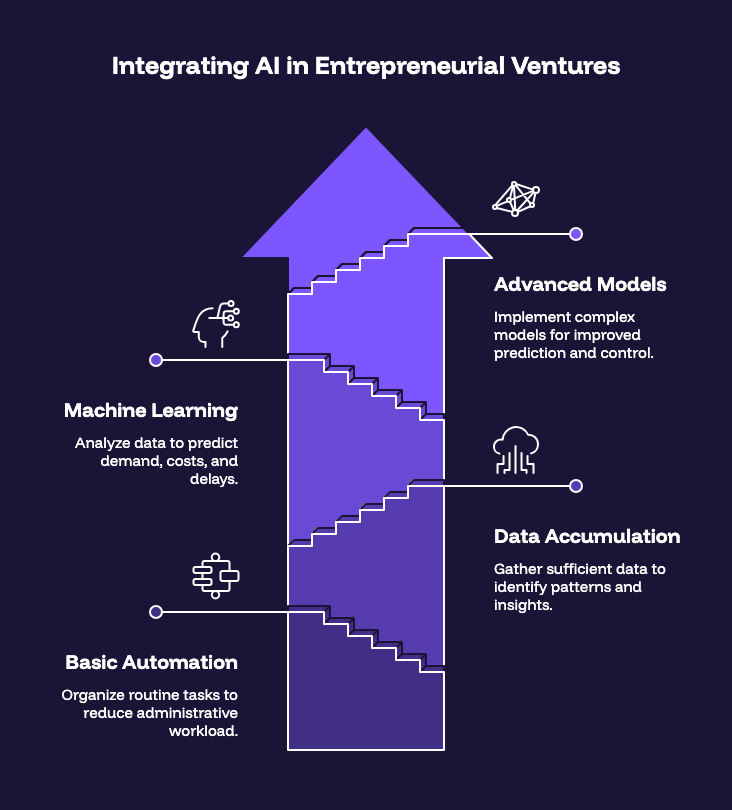
In entrepreneurial ventures and new initiatives, AI can generate value from the earliest stages. These teams often work with limited resources, high uncertainty, and pressure to validate products, services, or business models quickly. In this context, timely information can make a significant difference.
Automation can help organize basic processes such as customer follow-up, task assignment, progress reporting, budget control, and request management. This reduces the administrative workload and allows the founding team to devote more time to strategic decisions, business development, and customer relationships.
Machine learning can add value when an initiative begins to accumulate sufficient data. For example, it can help identify patterns in demand, response times, recurring costs, supplier performance, or the activities that cause the greatest delays. With this information, the venture can adjust its operations before problems escalate.
The key is to apply these capabilities gradually. A venture does not need to adopt complex systems from the outset. It can begin with simple automations, dashboards, and basic data analysis. Then, as operations grow, it can incorporate more advanced models to improve prediction, prioritization, and control.
Real-World Use Case
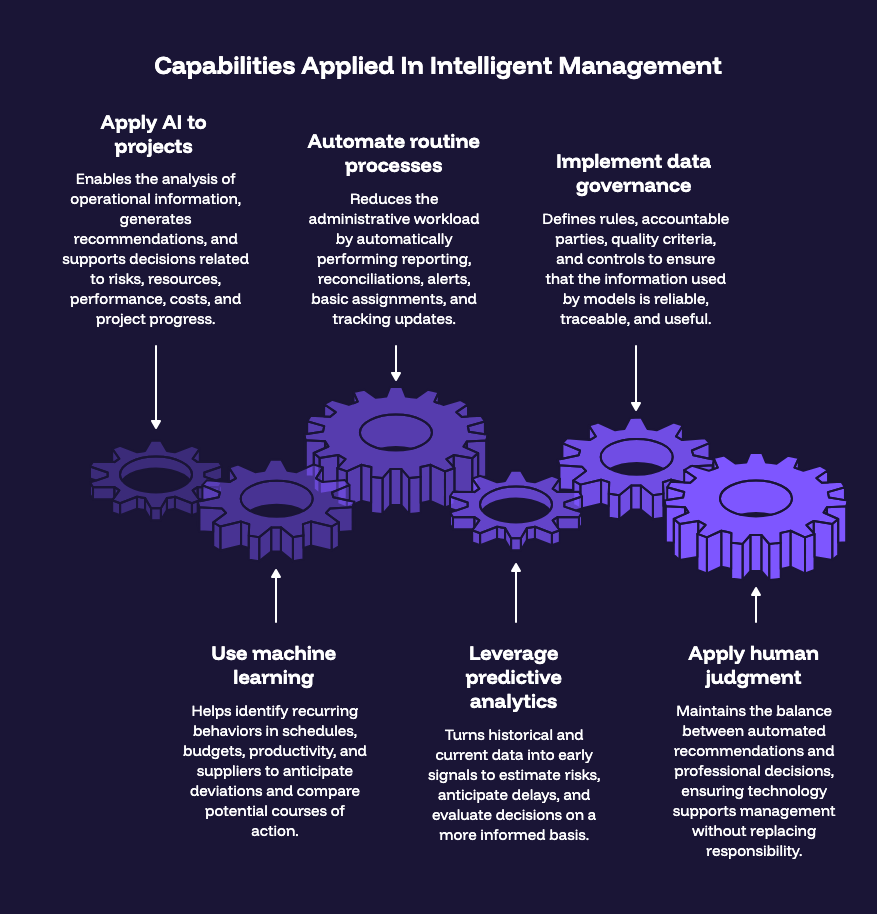
A company managing multiple operational improvement initiatives began to notice frequent delays in internal projects. Each department reported progress in different formats, budgets were updated late, and suppliers were evaluated mainly when a significant deviation had already occurred. The information was available, but scattered.
The team decided to implement a more intelligent approach to managing its portfolio of initiatives. First, it organized historical data on schedules, costs, changes, and supplier performance. It then automated weekly progress reports and created alerts for activities at risk of delay. Next, it introduced a predictive analytics model to identify patterns associated with recurring delays.
The results began to emerge in the way projects were managed. The team was able to identify that certain delays were caused not only by technical execution issues, but also by late internal approvals and suppliers whose performance was inconsistent on specific activities. With this information, they adjusted activity sequences, strengthened checkpoints, and renegotiated monitoring arrangements with contractors.
The most important change was that decisions were no longer made only once a problem had become obvious. The organization began to act on early signals. This helped reduce surprises, improve coordination across departments, and make better use of the team’s time for analysis, prioritization, and preventive action.
Summary Of Capabilities Applied In Intelligent Management
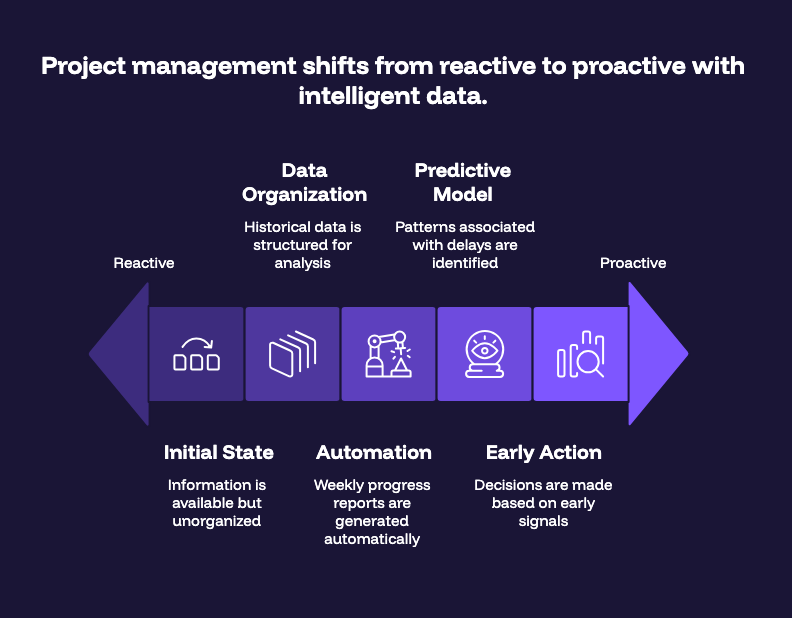
Artificial intelligence applied to projects: Enables the analysis of operational information, generates recommendations, and supports decisions related to risks, resources, performance, costs, and project progress.
Machine learning for patterns and prediction: Helps identify recurring behaviors in schedules, budgets, productivity, and suppliers. Its application makes it possible to anticipate deviations and compare potential courses of action.
Automation of routine processes: Reduces the administrative workload by automatically performing reporting, reconciliations, alerts, basic assignments, and tracking updates.
Predictive analytics for preventive decisions: Turns historical and current data into early signals. Makes it possible to estimate risks, anticipate delays, and evaluate decisions on a more informed basis.
Data governance: Defines rules, accountable parties, quality criteria, and controls to ensure that the information used by models is reliable, traceable, and useful.
Human judgment and leadership: Maintains the balance between automated recommendations and professional decisions. Ensures that technology supports management without replacing responsibility, experience, and judgment.
Intelligent Management As An Evolution In Project Execution
Intelligent project management is not about replacing traditional methodologies or delegating critical decisions to a tool. It is about integrating AI, machine learning, and automation into a more informed, preventive, and adaptable management approach. The objective is to improve the team’s ability to interpret signals, act promptly, and make better use of its resources.
This evolution allows information to move beyond being a passive record and become a strategic asset. When data is captured, organized, and analyzed correctly, it helps build more reliable estimates, prioritize actions, anticipate risks, and improve credibility with stakeholders.
For this to work, technology must be accompanied by leadership, governance, and culture. Without reliable data, models lose value. Without controls, automation can create risks. Without human judgment, recommendations may be misinterpreted.
The future of project management will not simply be more digital. It will become more intelligent as it combines reliable information, advanced analytics, and responsible leadership. This integration will enable clearer execution, reduce uncertainty, and support stronger decisions under operational pressure.
References And Sources
McKinsey & Company. (2025). The State of AI: Global Survey 2025. McKinsey & Company.