
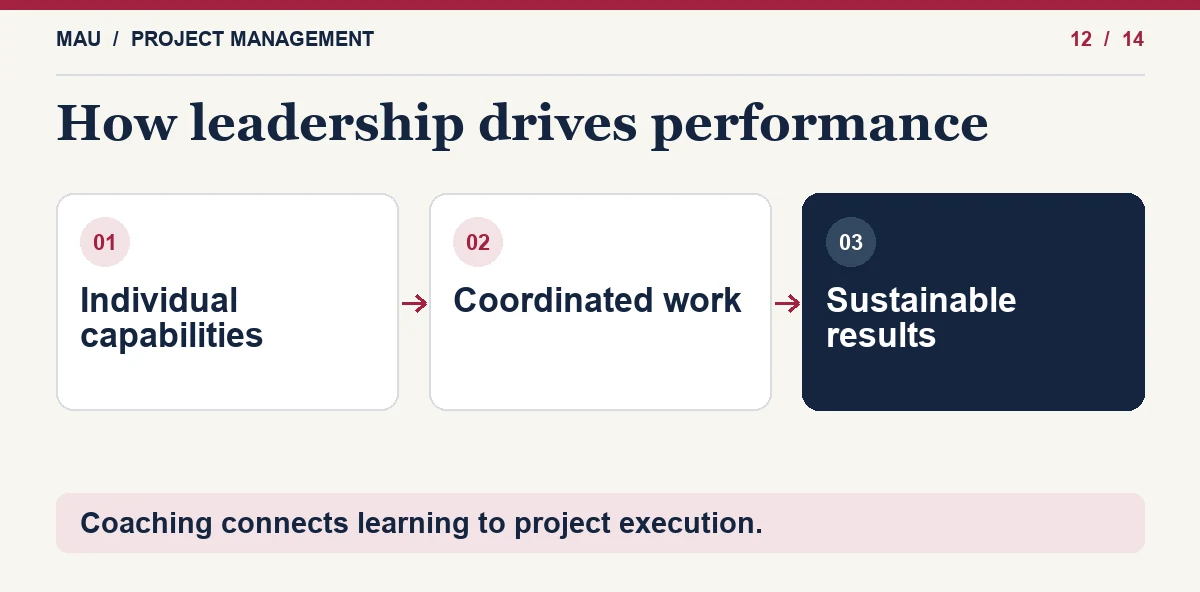
Effective leadership in project management goes beyond technical knowledge, planning, and the ability to supervise execution. It requires the capacity to inspire teams, make informed decisions, resolve conflicts, manage change, and maintain alignment with organizational objectives. As projects become more complex and dynamic, leadership becomes a critical factor in transforming individual capabilities into coordinated performance and sustainable results.
Developing these capabilities requires continuous learning, practical experience, and structured guidance. Coaching provides a valuable approach to strengthening both technical and managerial skills by helping project leaders reflect on their decisions, address real challenges, and improve how they guide their teams. When integrated into professional development, coaching supports stronger leadership, greater adaptability, and a culture of collaboration that improves project execution and organizational performance.
Table of contents
Why leadership in project management matters
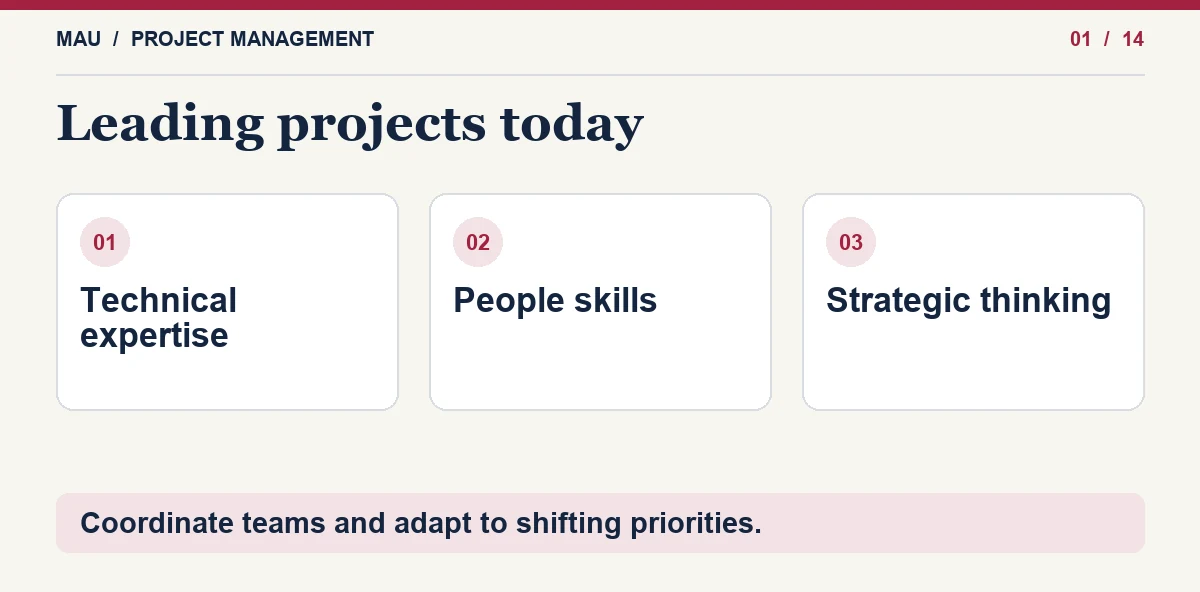
Project leadership is evolving toward a more integrated understanding of performance, where technical expertise must be complemented by interpersonal skills, strategic thinking, and the ability to respond effectively to uncertainty. Leaders are increasingly expected to coordinate multidisciplinary teams, manage diverse stakeholder expectations, and maintain engagement while addressing changing priorities. These conditions make communication, emotional awareness, conflict resolution, and adaptability essential capabilities rather than optional leadership qualities.
This evolution is particularly relevant for organizations managing transformation initiatives, entrepreneurial ventures, and projects that require continuous innovation. In these environments, leaders must balance execution discipline with flexibility while encouraging learning and accountability. Coaching becomes especially valuable because it connects professional development with practical project challenges, allowing leaders to strengthen their judgment, build confidence, and develop the skills needed to guide teams through changing conditions.
Coaching as a foundation for effective project leadership
Project leadership development requires more than acquiring knowledge about methodologies, tools, and management processes. Technical training provides an important foundation, but effective leadership depends on how that knowledge is applied when working with people, managing competing priorities, and responding to situations that do not have straightforward solutions.
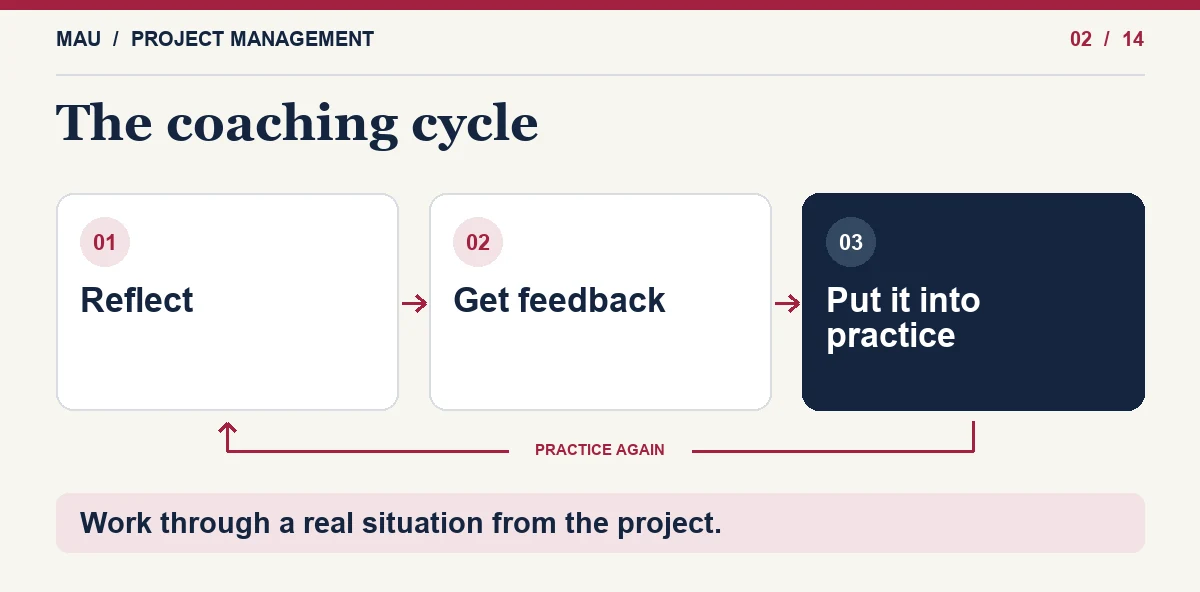
Coaching offers a structured approach to developing these capabilities through reflection, feedback, and practical application. Instead of focusing exclusively on transferring information, it encourages leaders to examine their decisions, identify opportunities for improvement, and develop greater awareness of how their behavior influences team performance.
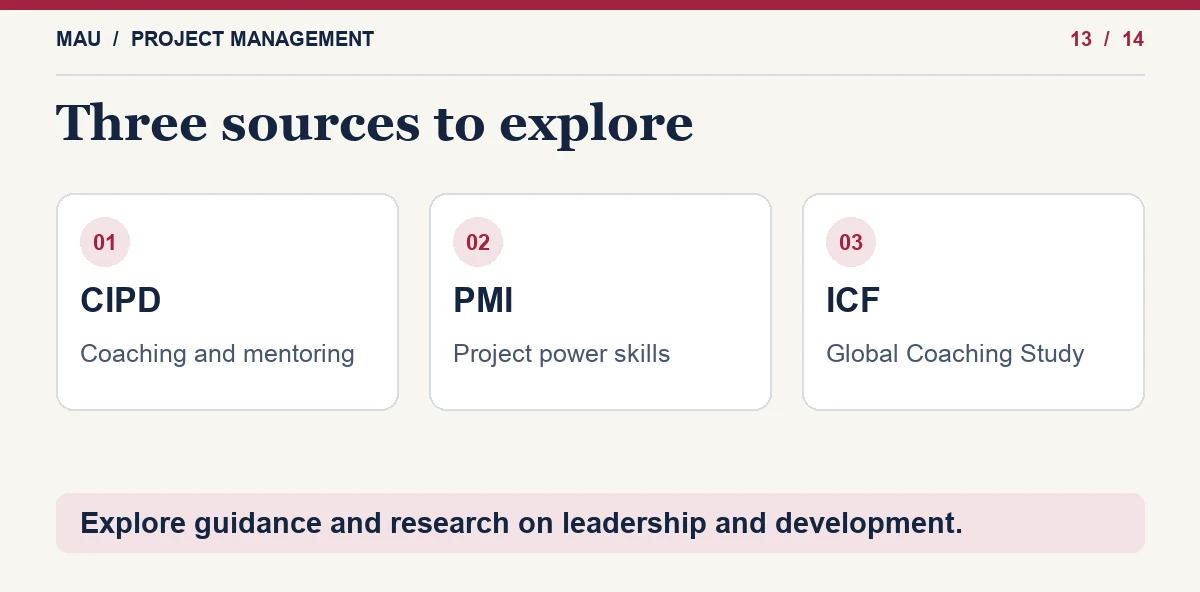
The Chartered Institute of Personnel and Development (CIPD), a professional organization specializing in human resources and people development, recognizes coaching and mentoring as valuable approaches to workplace learning. Its guidance emphasizes the importance of connecting these practices with broader organizational development objectives and distinguishing coaching from other forms of professional support (CIPD, 2025).
In project environments, this approach allows leadership development to become part of daily execution. A project manager facing difficulties with delegation, communication, or stakeholder alignment can use coaching to reflect on specific situations and translate that learning into improved leadership practices. The result is a more intentional development process that strengthens individual performance while supporting broader project objectives.
Adaptability and resilience in dynamic project environments
Projects operate under conditions where uncertainty, changing priorities, and unexpected challenges are common. Leaders must be able to adjust their approach without losing sight of objectives, maintain team confidence during difficult periods, and respond constructively when initial plans no longer reflect the operating environment.
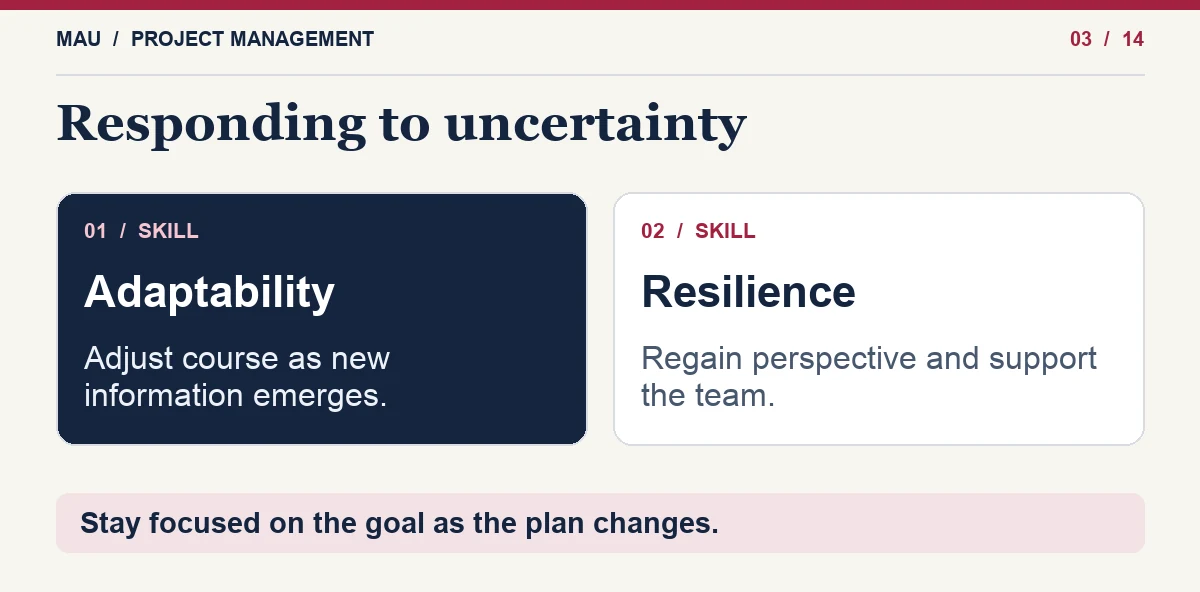
Adaptability involves recognizing when a different course of action is needed and adjusting based on available information. Resilience complements this capability by helping leaders maintain perspective, manage pressure, and recover from setbacks. Together, these skills strengthen the ability to guide projects through complex situations while preserving team effectiveness.
Coaching supports the development of adaptability by encouraging leaders to evaluate how they respond to uncertainty. Through reflection on real project situations, leaders can identify behaviors that limit their effectiveness, explore alternative responses, and strengthen their confidence when making decisions under pressure.
A resilient leader also contributes to a more stable team environment. When challenges are addressed with clarity and constructive communication, team members are more likely to remain engaged and contribute solutions. This creates conditions where uncertainty becomes an opportunity for learning and improvement rather than a continuous source of disruption.
Transformational leadership and team motivation
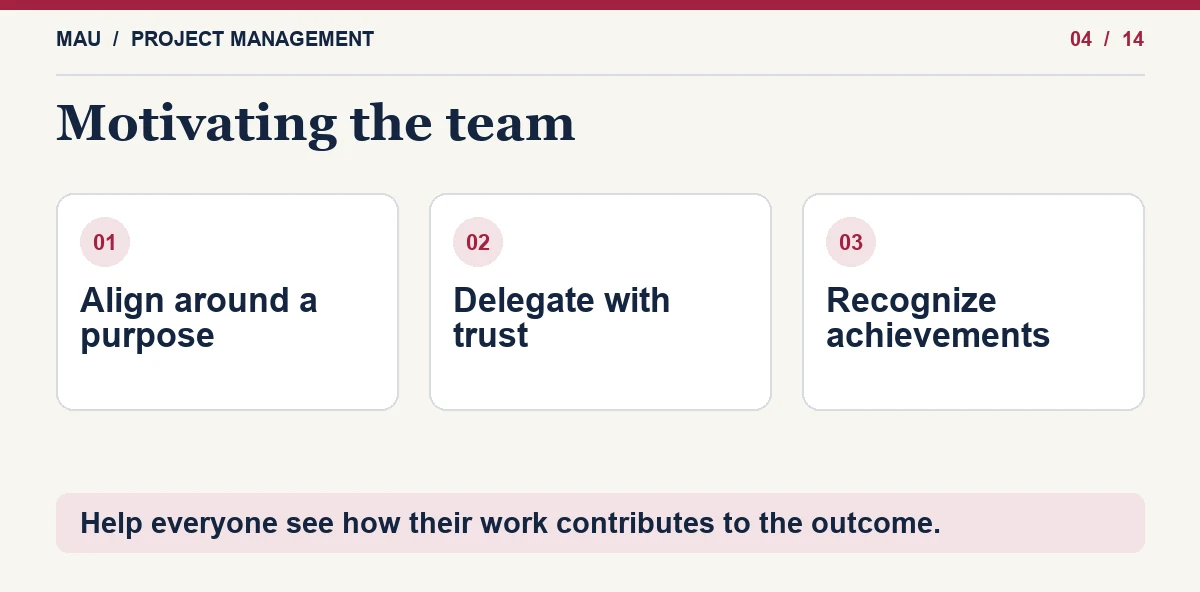
Leadership in project management extends beyond assigning tasks, monitoring performance, and ensuring that deliverables are completed. Effective leaders create a shared understanding of project objectives and help team members recognize how their contributions support broader organizational results.
Transformational leadership emphasizes inspiration, empowerment, and professional development. It encourages leaders to communicate a compelling direction, promote individual responsibility, and build an environment where people feel motivated to contribute beyond minimum expectations. This approach is particularly relevant when teams must maintain commitment throughout demanding or extended projects.
Research published in the Project Management Institute’s Pulse of the Profession 2023, focused on the interpersonal capabilities that support project success, identifies communication, problem-solving, collaborative leadership, and strategic thinking as particularly important leadership skills. The findings reinforce the need to develop capabilities that strengthen cooperation and organizational alignment alongside technical project management expertise (Project Management Institute, 2023).
Coaching helps leaders translate these capabilities into practical behaviors. It encourages them to improve how they delegate, provide feedback, recognize achievements, and support individual development. When leaders create opportunities for participation and informed decision-making, they strengthen ownership and encourage team members to take greater responsibility for results.
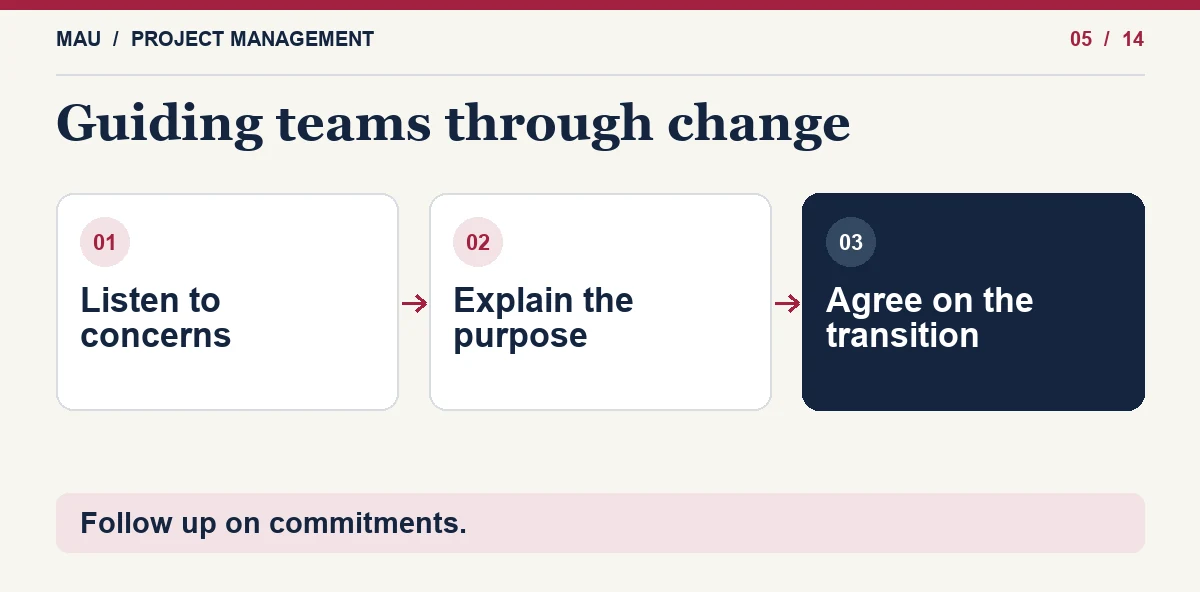
Change management and organizational resistance
Managing change is an essential leadership responsibility because projects frequently introduce new processes, responsibilities, technologies, or ways of working. Even when the expected benefits are clear, people may experience uncertainty about how changes will affect their work, their roles, or their future within the organization.
Resistance should not automatically be interpreted as opposition to project objectives. It may reflect incomplete information, previous experiences, competing priorities, or concerns that have not been adequately addressed. Leaders who understand these factors are better prepared to respond constructively and build acceptance around the intended transformation.
Coaching supports change leadership by strengthening the ability to listen, communicate, negotiate, and manage difficult conversations. It helps project managers recognize their own responses to resistance and develop approaches that encourage participation rather than imposing solutions without sufficient understanding of stakeholder concerns.
Effective change management also requires consistency between leadership messages and actions.
Teams are more likely to support change when they understand its purpose, have opportunities to express concerns, and observe that leadership decisions are aligned with communicated objectives. Through coaching, leaders can develop greater sensitivity to these dynamics and improve their ability to guide transitions while maintaining trust and engagement.
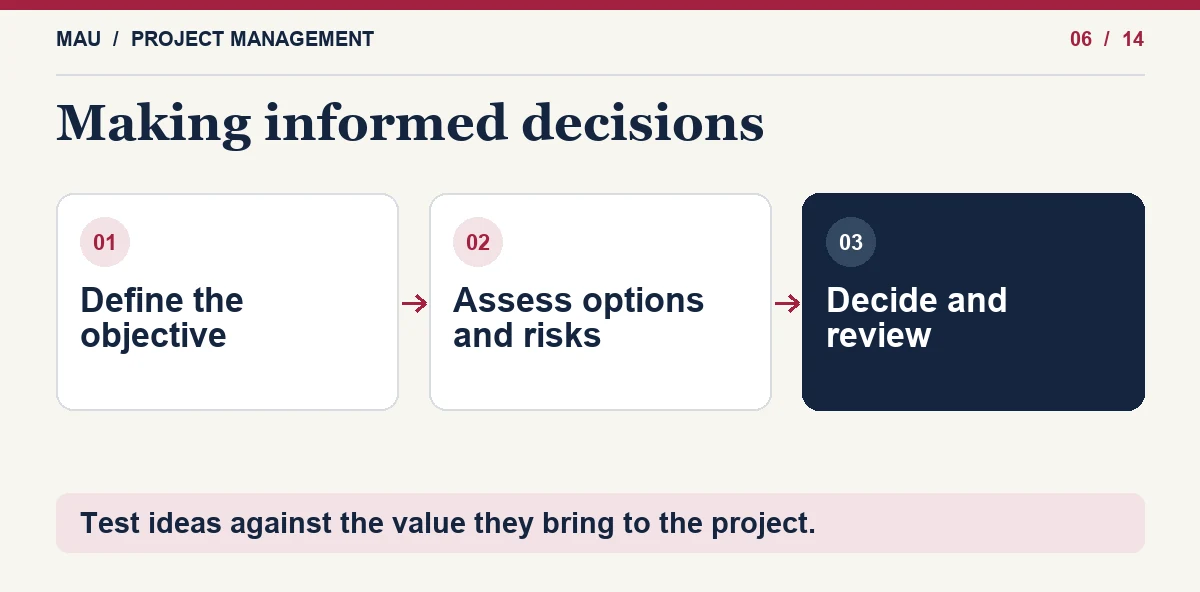
Strategic thinking, innovation, and decision-making
Project leaders must understand how their decisions influence both immediate execution and broader organizational objectives. This requires strategic thinking: the ability to connect project activities with expected outcomes, recognize emerging opportunities, and evaluate how different decisions may affect performance.
Strategic thinking becomes particularly important when projects face competing demands, limited resources, or changing business expectations. Leaders must evaluate alternatives, consider associated risks, and determine which actions offer the greatest contribution to project objectives. This requires analytical judgment as well as the ability to challenge assumptions and remain open to different perspectives.
Coaching contributes to the development of strategic thinking by creating opportunities to question established approaches and examine decisions from multiple angles. Rather than providing ready-made answers, effective coaching encourages leaders to explore alternatives, evaluate consequences, and build confidence in their own decision-making processes.
Innovation also benefits from this approach. Leaders who encourage constructive questioning and creative problem-solving create conditions where teams can identify new solutions to operational challenges. When innovation is supported by strategic judgment, it becomes a practical capability for improving project execution instead of an isolated organizational aspiration.
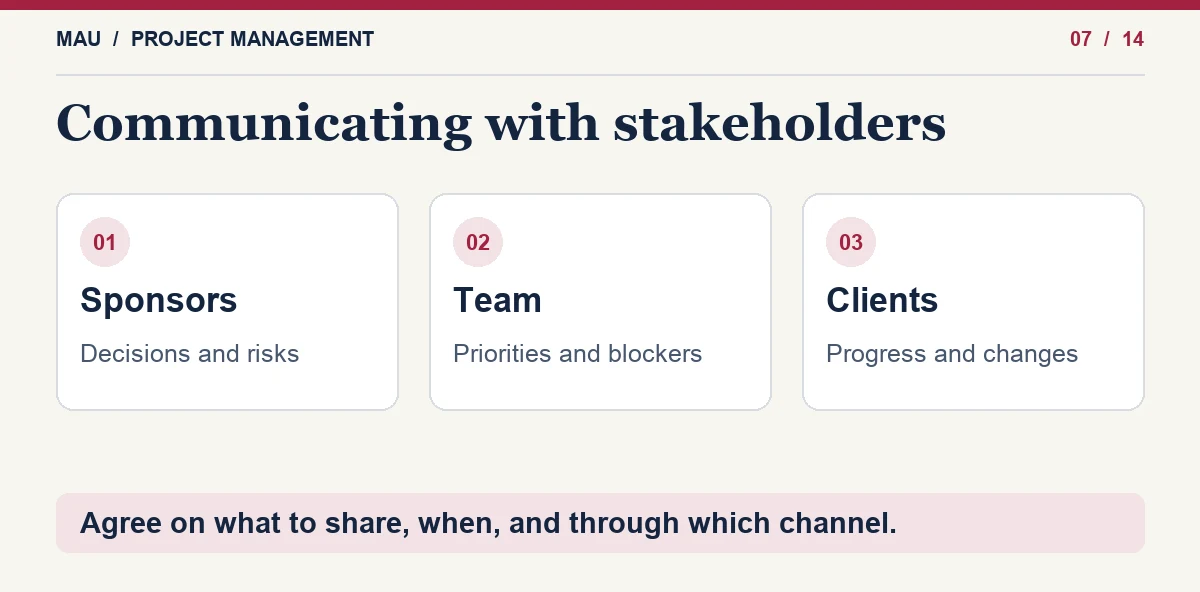
Stakeholder management and effective communication
Project leadership depends heavily on the ability to establish productive relationships with people who influence or are affected by project outcomes. These stakeholders may include sponsors, customers, functional managers, contractors, external partners, and project team members. Each group brings different priorities, expectations, and perspectives.
Effective communication allows leaders to align these interests and maintain a shared understanding of project objectives. It requires more than distributing reports or conducting meetings. Leaders must be able to explain decisions, listen actively, manage expectations, negotiate disagreements, and adapt their communication to different audiences.
Coaching helps strengthen these interpersonal capabilities by encouraging leaders to reflect on how they communicate and how others interpret their messages. It can support improvements in active listening, conflict management, negotiation, and the ability to conduct conversations that involve different or opposing interests.
Strong stakeholder relationships are built through consistency, transparency, and credibility. When project leaders communicate clearly and address concerns in a timely manner, they create the conditions for collaboration and continued support. This becomes especially valuable when projects face difficult decisions or require adjustments that affect multiple organizational areas.
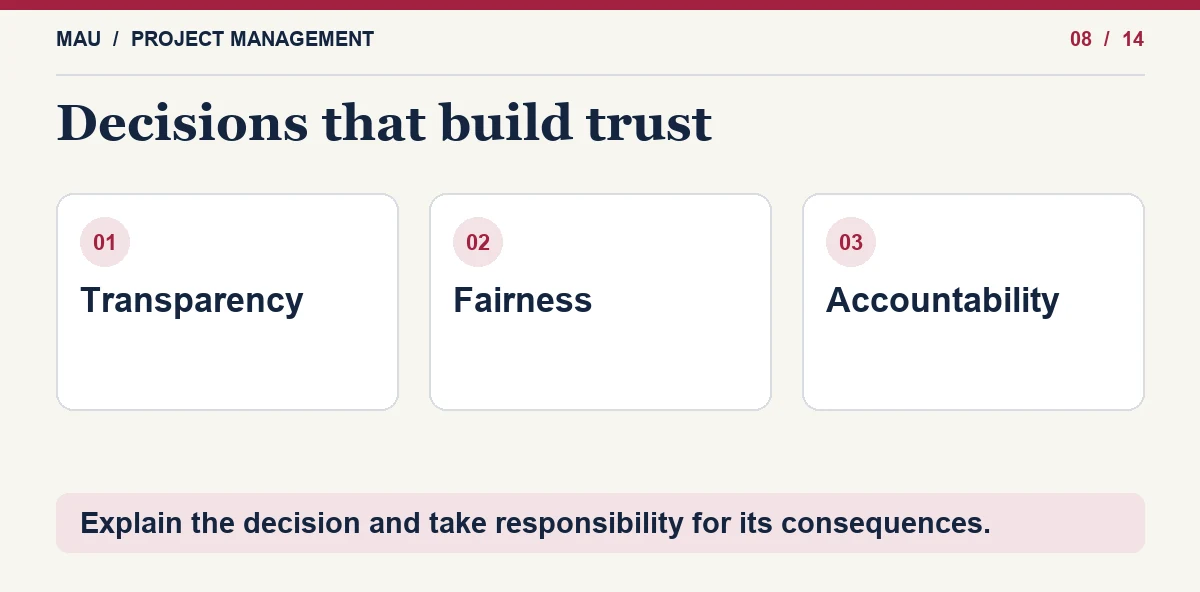
Ethics and accountability in project leadership
Ethical leadership provides the foundation for trust and credibility within project environments. Project managers frequently make decisions involving resources, contractual commitments, competing stakeholder interests, and information that may affect people or organizations. These responsibilities require transparency, fairness, and professional judgment.
Leadership effectiveness cannot be evaluated only through achievement of schedules, budgets, or deliverables. It must also consider how results are obtained, how people are treated, and whether decisions reflect organizational values and professional responsibilities. A project that achieves its objectives through practices that undermine trust may create long-term consequences for the organization.
Coaching provides opportunities to strengthen ethical awareness by encouraging leaders to examine the reasoning behind their decisions and consider their potential consequences. Reflection and constructive feedback help identify situations where pressure, personal assumptions, or conflicting interests may influence professional judgment.
Accountability also requires leaders to recognize mistakes, communicate challenges, and assume responsibility for their decisions. When these behaviors are demonstrated consistently, they establish expectations for the broader team. This strengthens organizational integrity and supports relationships based on trust, fairness, and shared responsibility.
Coaching and continuous learning as a leadership practice
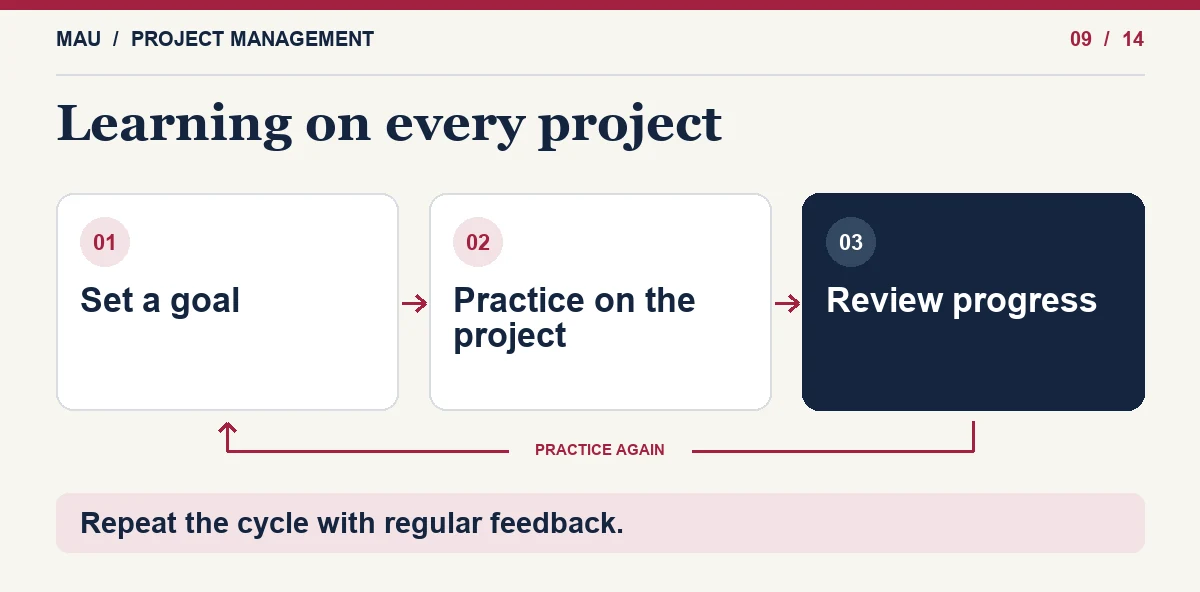
Leadership development becomes more effective when learning is connected to practical experience rather than treated as an occasional training activity. Projects create ongoing opportunities to develop communication, decision-making, adaptability, and conflict resolution through the challenges encountered during execution.
A structured coaching process should begin with clear development objectives aligned with both individual needs and project priorities. These objectives may include improving delegation, managing difficult stakeholder conversations, strengthening decision-making under uncertainty, or developing a more collaborative leadership approach.
The International Coaching Federation (ICF), a global professional organization dedicated to advancing coaching standards and practices, reported continued growth in the coaching profession in its 2025 ICF Global Coaching Study. The study provides broader context for the increasing relevance of structured coaching in professional and organizational development, particularly in leadership-related areas (International Coaching Federation, 2025).
The effectiveness of coaching depends on sustained application. Regular sessions, constructive feedback, practical development goals, and opportunities to apply new behaviors during project execution help turn learning into professional improvement. When organizations support this process, leadership development becomes part of their operating culture and contributes to stronger collaboration, adaptability, and long-term capability.
Illustrative case: project leadership and coaching
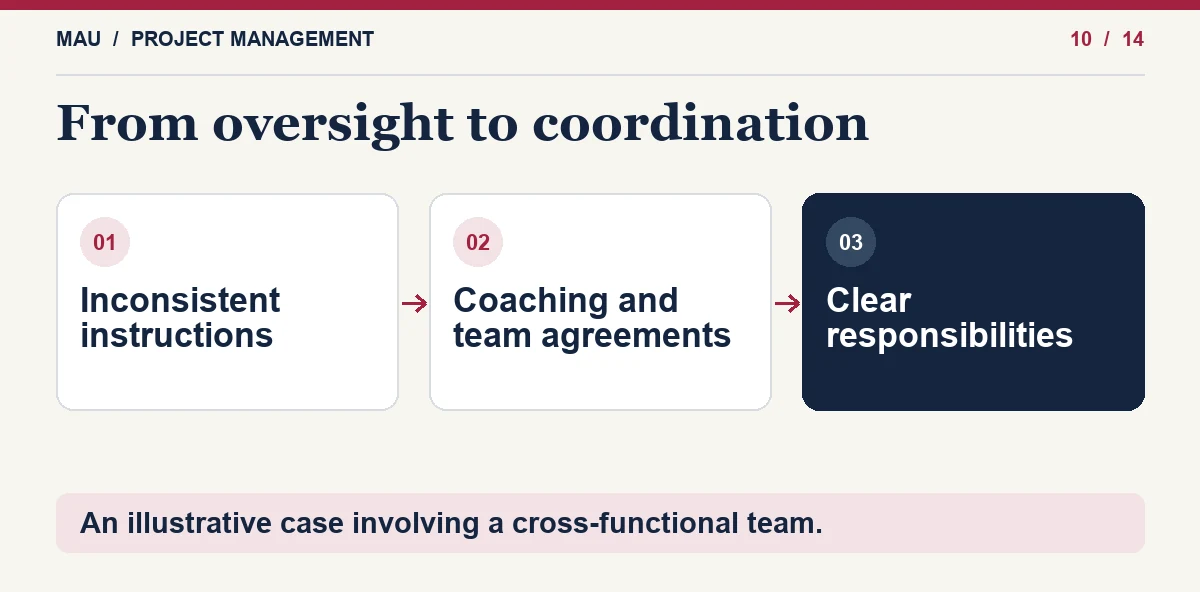
Illustrative case based on typical project leadership and coaching challenges.
A company implementing an organizational improvement initiative assigned an experienced technical manager to lead a multidisciplinary project team. The manager understood the operational requirements and had strong planning capabilities but began experiencing difficulties coordinating team members from different departments and managing stakeholder expectations.
Although the project had clear objectives and a defined implementation plan, communication problems started to affect execution. Team members received inconsistent instructions, responsibilities were not always understood, and disagreements between departments remained unresolved. The project manager responded by increasing supervision and requesting more frequent updates, but this approach created additional pressure without addressing the underlying leadership challenges.
To improve the situation, the organization introduced a structured coaching process focused on leadership development. The coaching sessions addressed communication, delegation, conflict resolution, stakeholder management, and decision-making. The manager reviewed specific situations from the project, identified recurring behaviors, and developed practical actions to improve interactions with the team.
The project also introduced regular feedback sessions and clearer responsibility agreements. Team members were encouraged to raise concerns earlier, discuss operational challenges openly, and participate more actively in decisions affecting their work. The manager gradually shifted from closely supervising individual tasks toward facilitating coordination and strengthening accountability.
As these practices became part of the project routine, the team developed clearer communication, more effective conflict resolution, and stronger alignment around shared objectives. The organization gained a more confident project leader and a better-coordinated team. The case illustrates how coaching can strengthen managerial capabilities and improve the conditions for successful project execution without depending exclusively on additional controls or technical procedures.
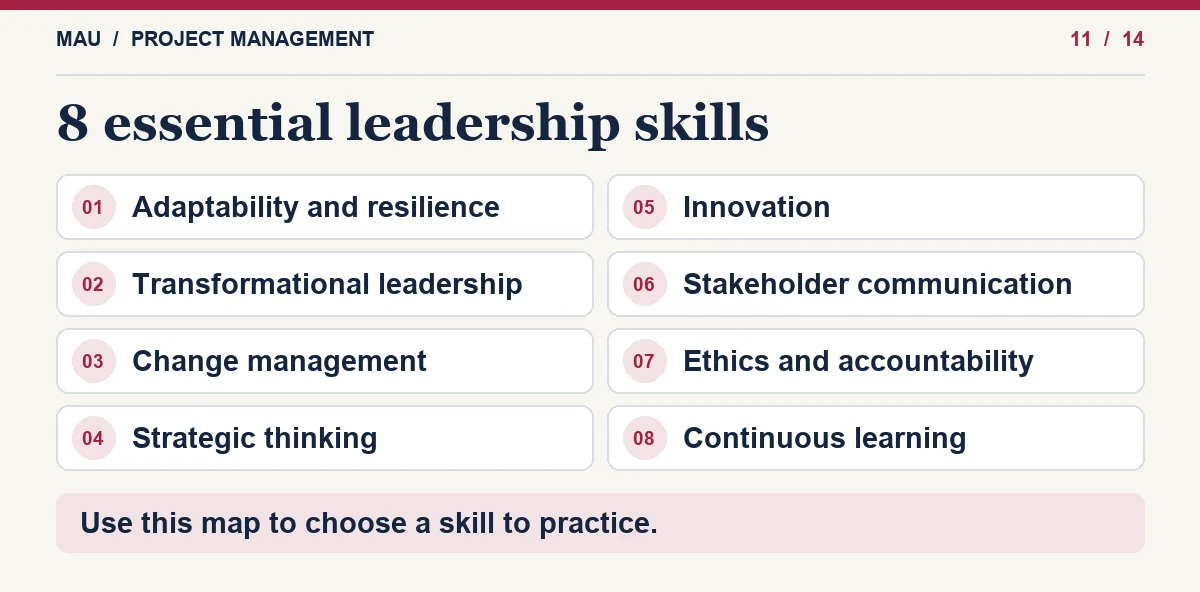
8 essential skills for leadership in project management
| Leadership capability | Role in project management | Coaching application |
|---|---|---|
| Adaptability and resilience | Respond to uncertainty while maintaining direction | Reflect on difficult situations and develop constructive responses |
| Transformational leadership | Inspire, motivate, and empower project teams | Strengthen delegation, feedback, and team engagement |
| Change management | Address resistance and facilitate transitions | Improve listening, communication, and stakeholder alignment |
| Strategic thinking | Connect project decisions with organizational objectives | Evaluate alternatives, assumptions, and consequences |
| Innovation | Encourage practical, creative problem-solving | Develop openness to new ideas and solutions |
| Stakeholder communication | Build productive relationships and manage expectations | Improve negotiation and conflict resolution |
| Ethics and accountability | Maintain transparency, fairness, and professional responsibility | Strengthen reflection and responsible decision-making |
| Continuous learning | Support sustained leadership improvement | Establish development goals, feedback, and practical application |
Project leadership as a driver of organizational performance
Effective project leadership is built through a combination of technical competence, interpersonal capabilities, strategic judgment, and continuous professional development. Planning and control remain necessary, but their effectiveness depends significantly on the people responsible for coordinating work, resolving challenges, and maintaining commitment throughout the project.
Coaching offers a practical way to strengthen these capabilities by connecting learning with real management situations. Through reflection, feedback, and guided application, leaders can develop greater confidence, improve their communication, and respond more effectively to the complex demands of project execution.
For organizations, investing in leadership development means strengthening their capacity to manage change, support innovation, and build collaborative teams. This is particularly valuable when initiatives require coordination across different functions or when leaders must operate under conditions of uncertainty and competing priorities.
The future of project management requires leaders who can guide people as effectively as they manage processes. Technical knowledge establishes the foundation, but leadership determines how that knowledge is translated into coordinated action. When coaching becomes part of the leadership development strategy, organizations create stronger conditions for professional growth, effective execution, and sustainable project results.
References and official sources
CIPD. Coaching and mentoring.
International Coaching Federation (2025). 2025 ICF Global Coaching Study: Executive Summary.
Project Management Institute (2023). Pulse of the Profession: Power Skills, Redefining Project Success.
Develop your leadership skills at MAU
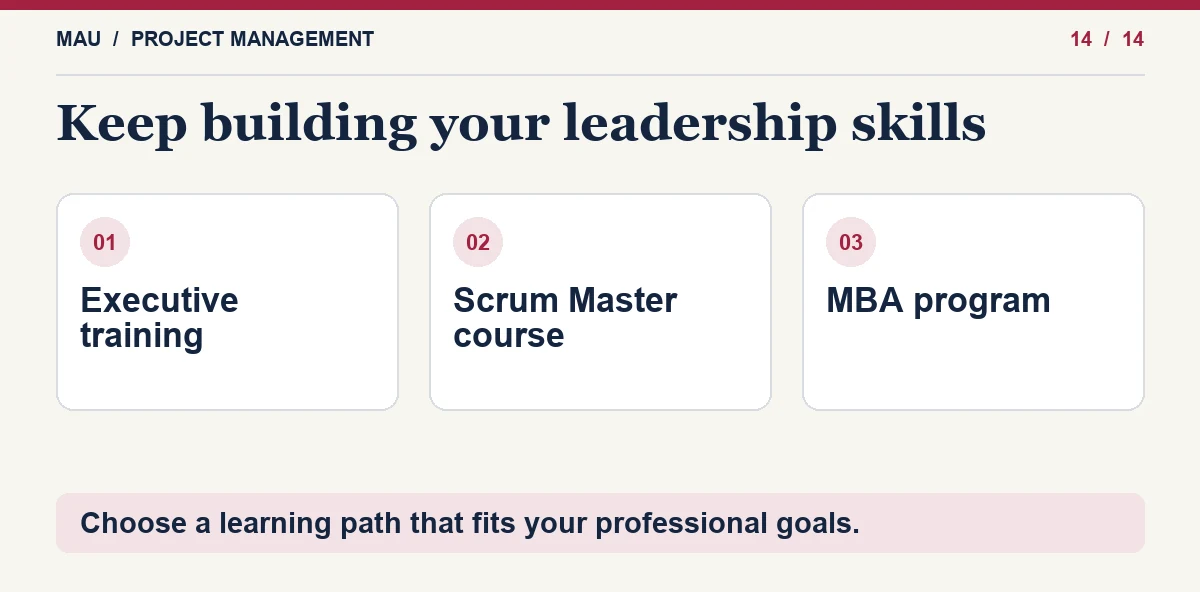
Explore MAU’s executive training programs for professional development opportunities, learn about the Scrum Master course, or discover the Master of Business Administration at Millennia Atlantic University to connect management study with your professional goals.